
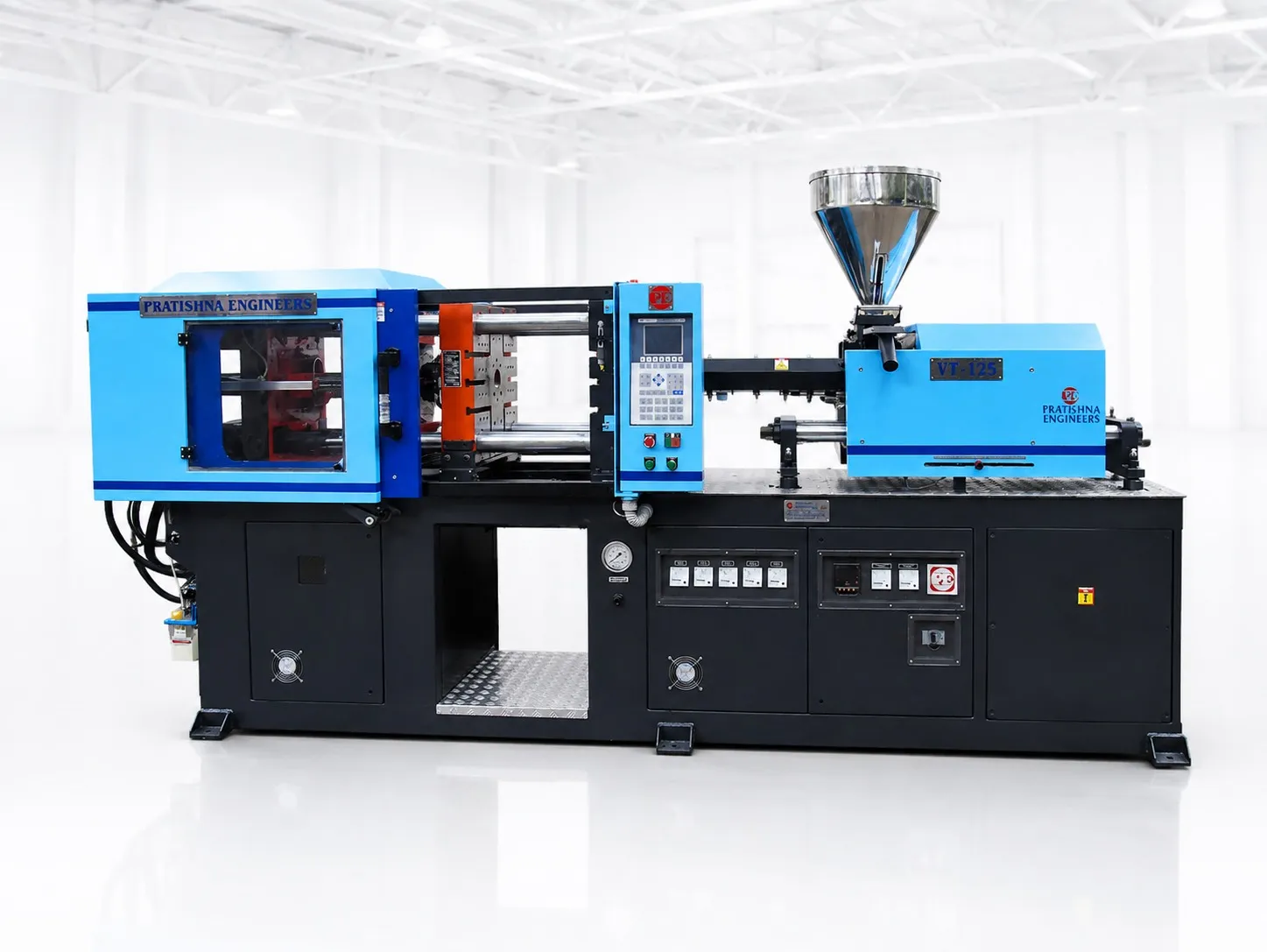
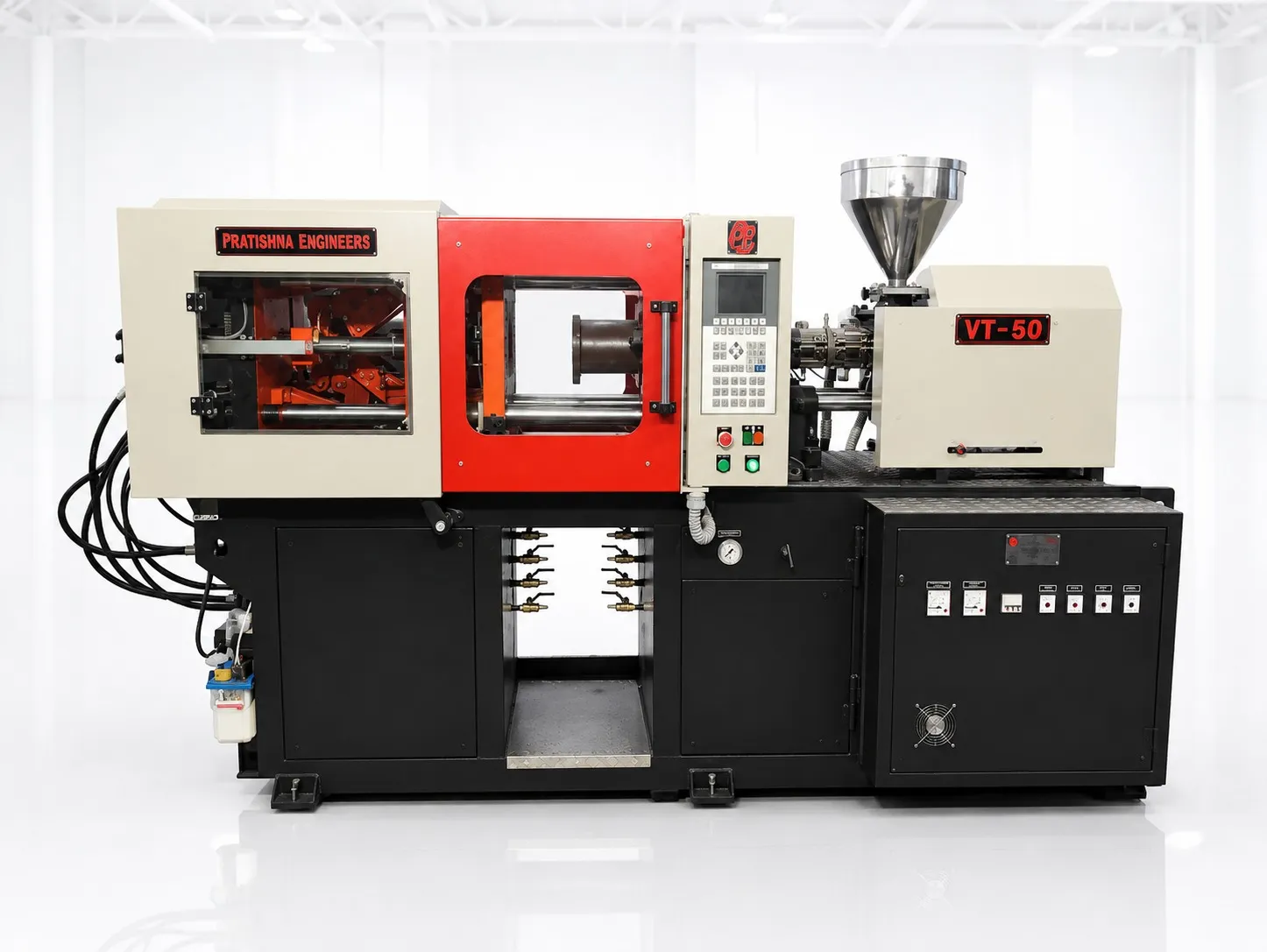
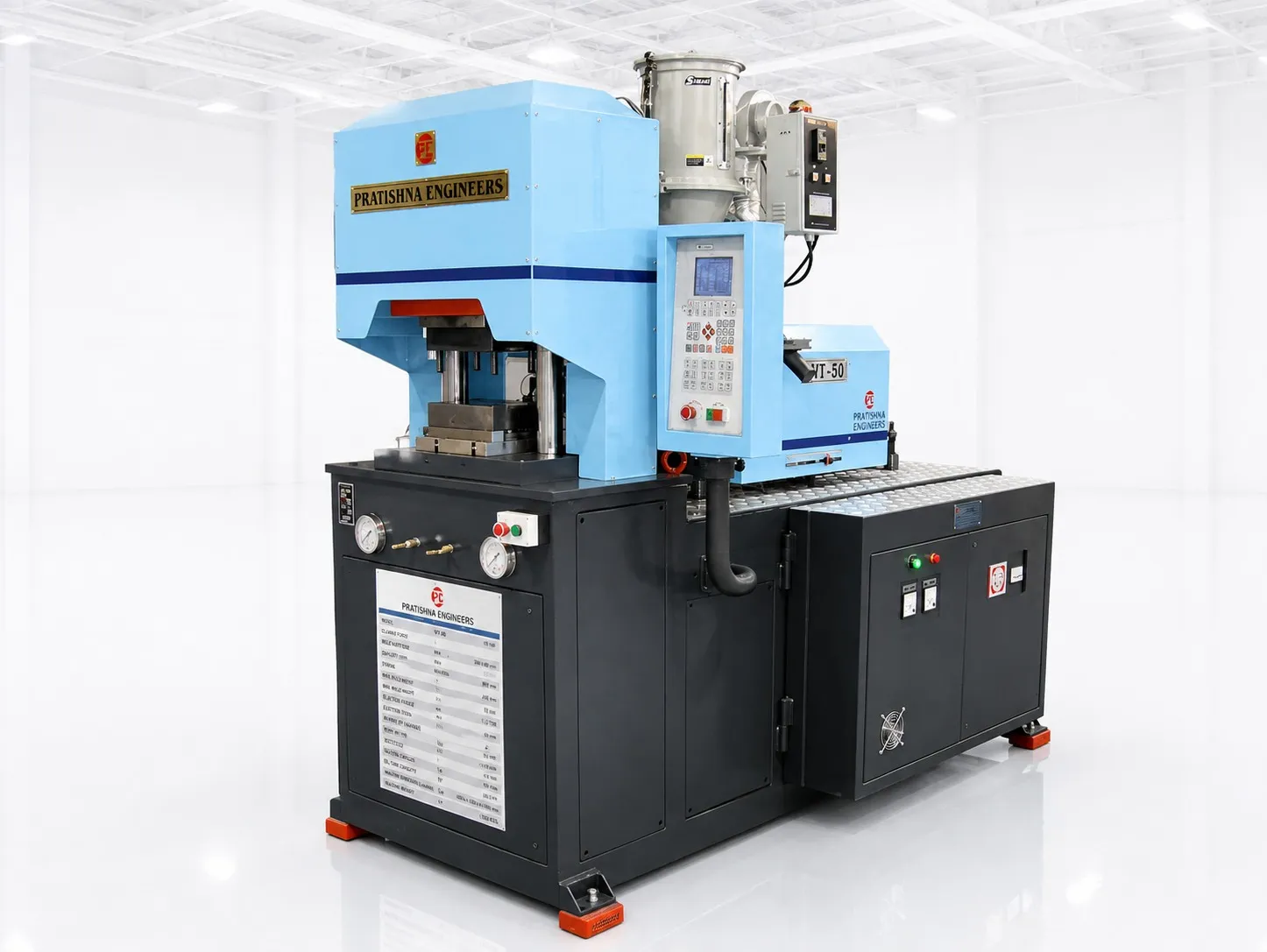
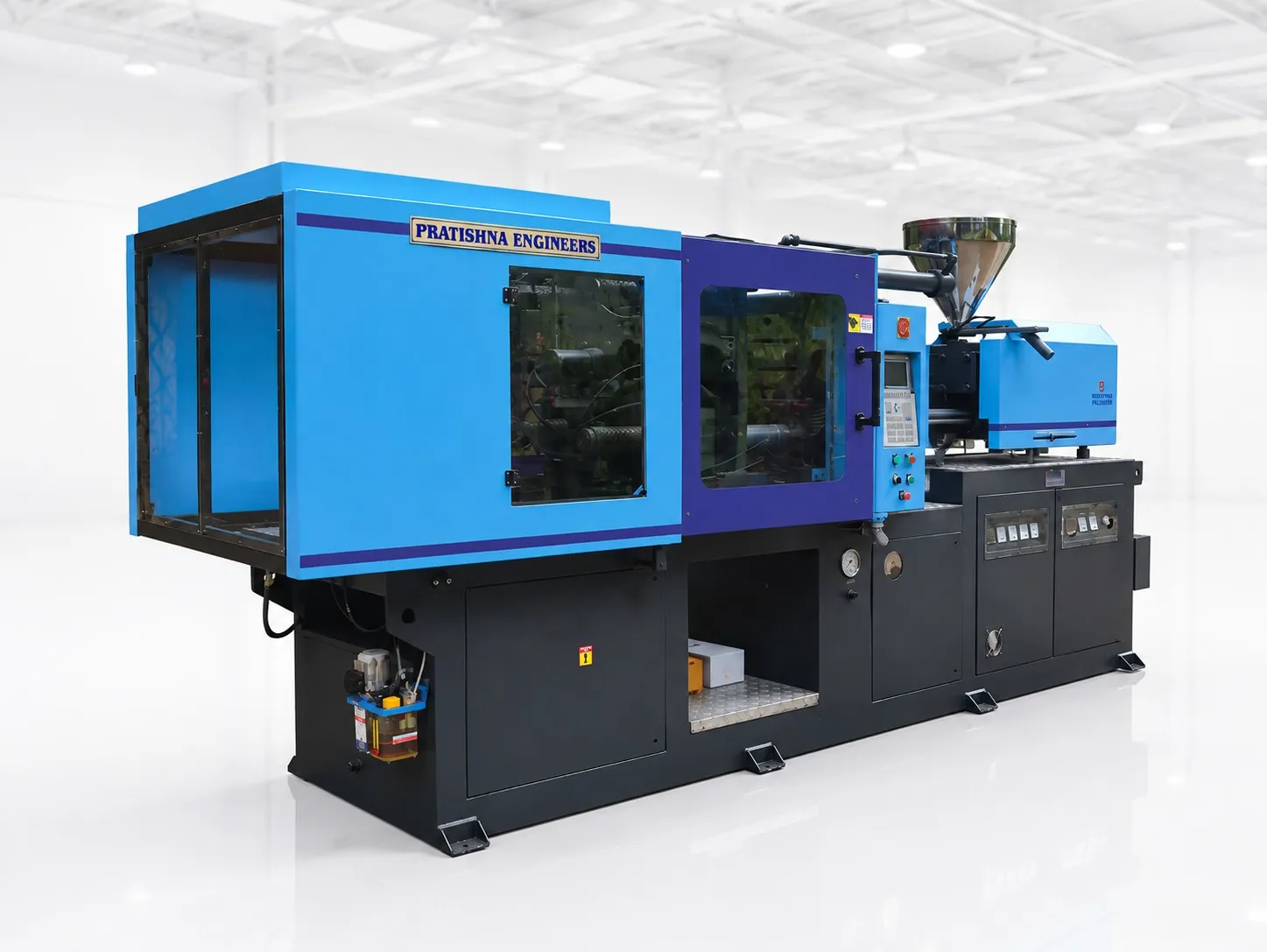
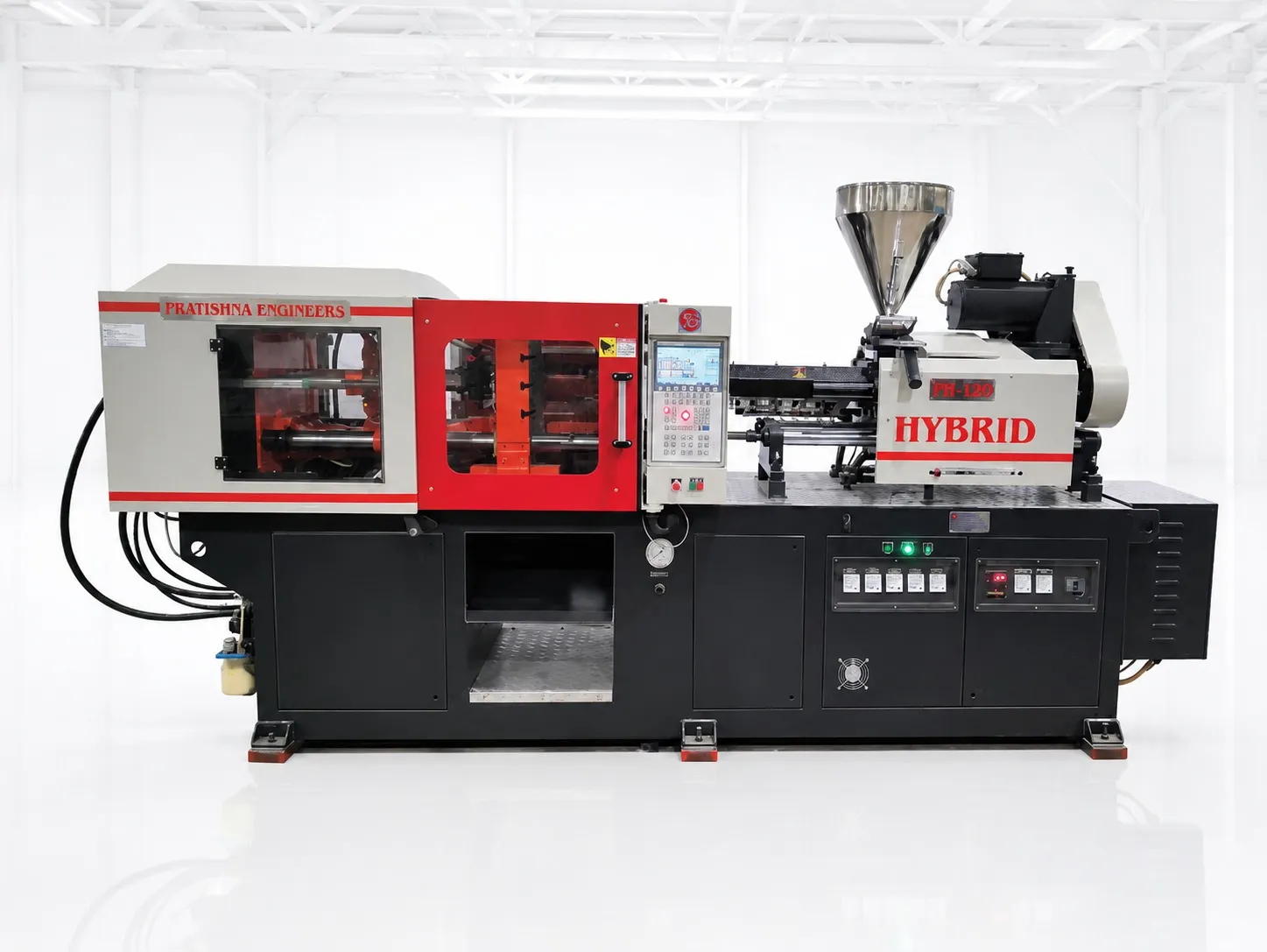
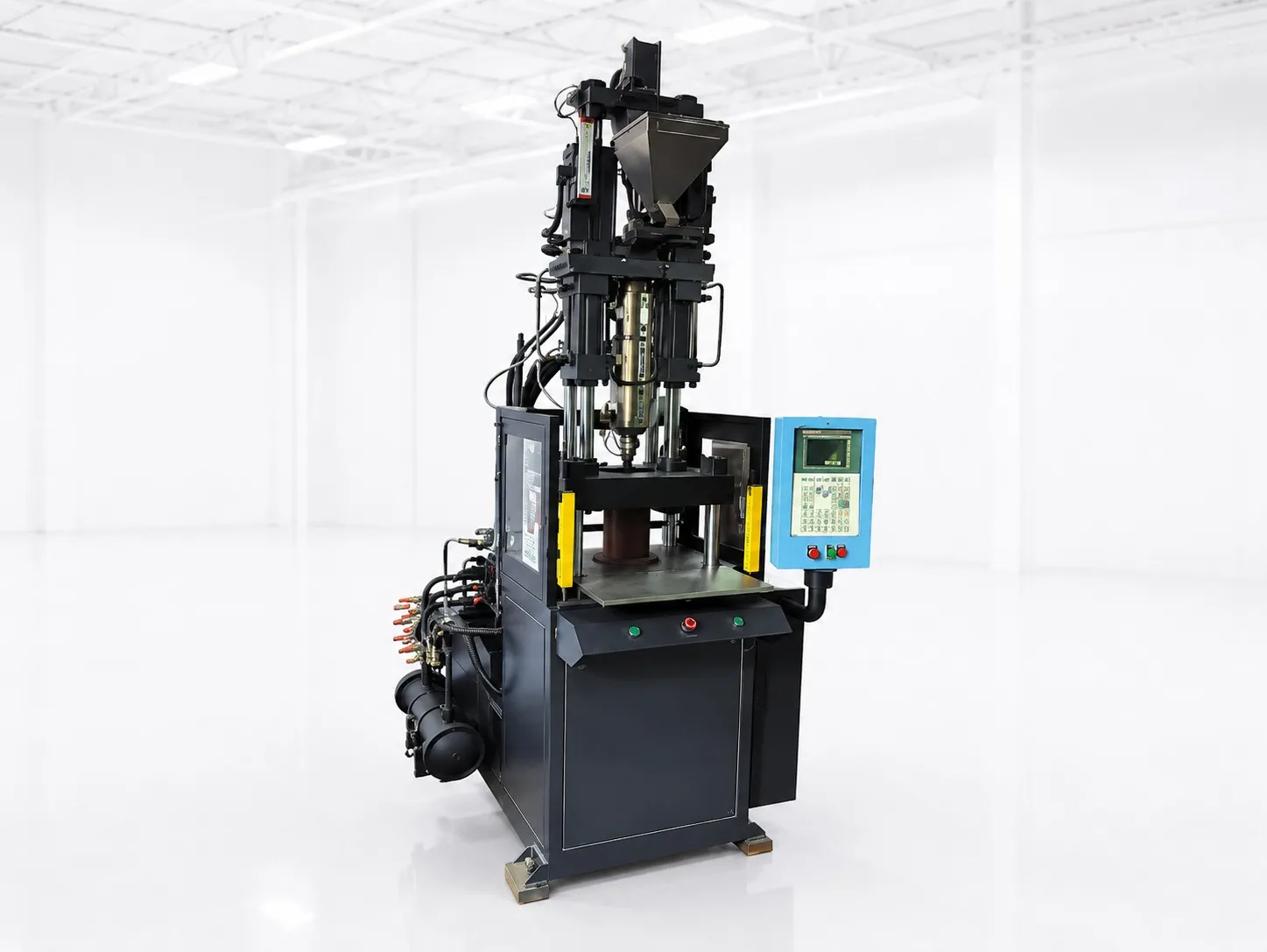
Injection Moulding Machine for Downlight and Spotlight Housings
Downlight and spotlight housings and trim rings are moulded on horizontal injection moulding machines, using FR PC, PC/ABS, glass-filled PA6 or thermally conductive PC. Machine size depends on housing diameter, can depth and cavity count. Recessed housings sit in a hot ceiling void, so heat-aged grades are used and must be dried and moulded without degradation.
Housing and trim are often separate tools with different demands: one structural, one cosmetic. Pratishna Engineers supplies horizontal injection moulding machines for downlight and spotlight parts and can recommend a configuration for each mould.
Manufacturing Downlight Housings?
Share the housing and trim drawings, materials and volumes, and Pratishna Engineers will recommend a suitable machine.
Machine Requirements for Downlight Housing Moulding
Recessed and surface fittings pair a heat-loaded can with a show-face trim. Points to check when selecting a machine:
- Heat-aged grades with glow-wire performance for the driver area
- Gloss or texture control on the cosmetic trim ring
- Gate kept off the visible trim face
- Fatigue-resistant wall sections at spring clip mounts
- Wear-resistant screw for glass-filled and conductive filled grades
- Mould depth and opening stroke for deep cans
Recommended Machine for Downlight and Spotlight Housings
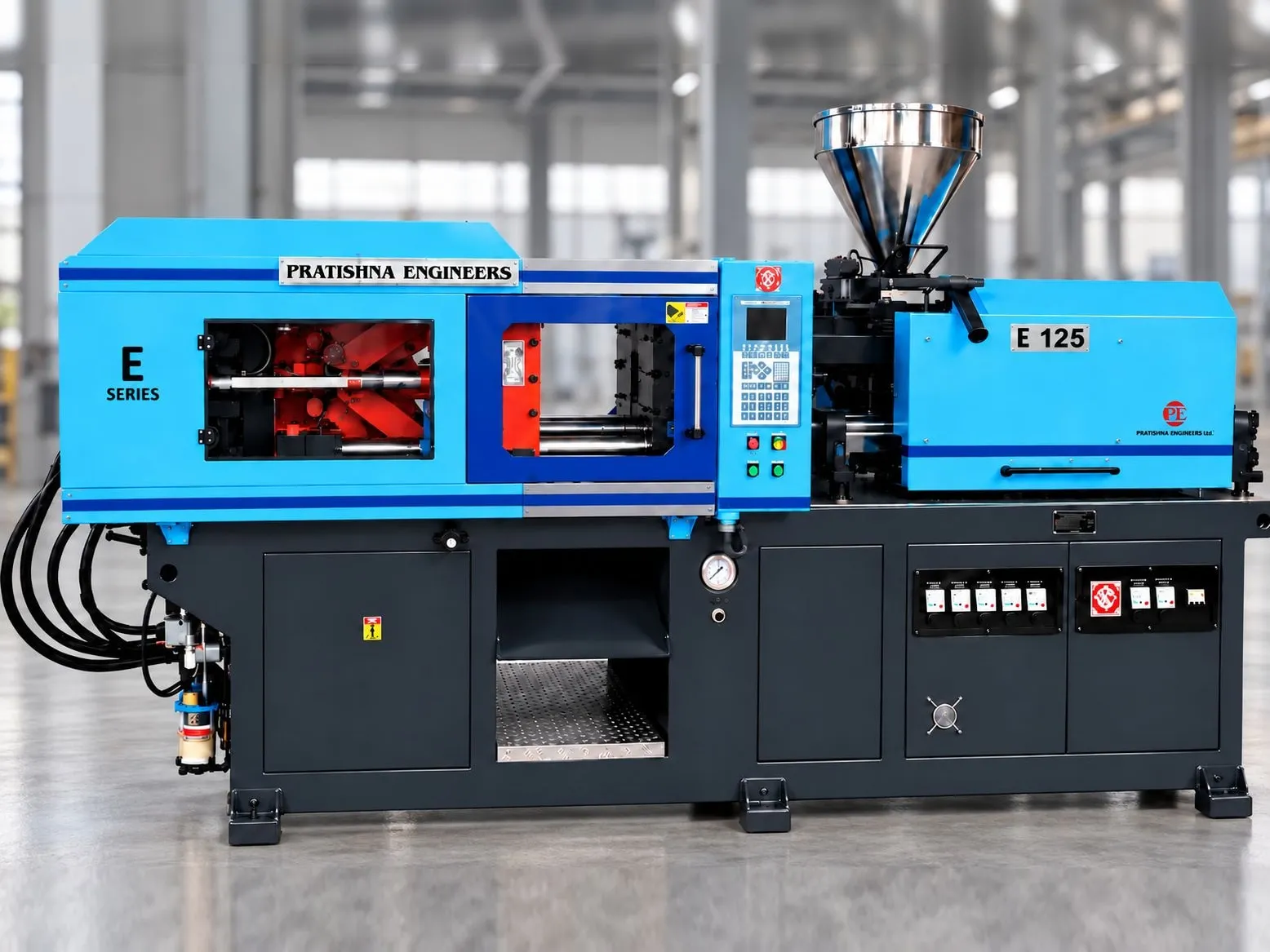
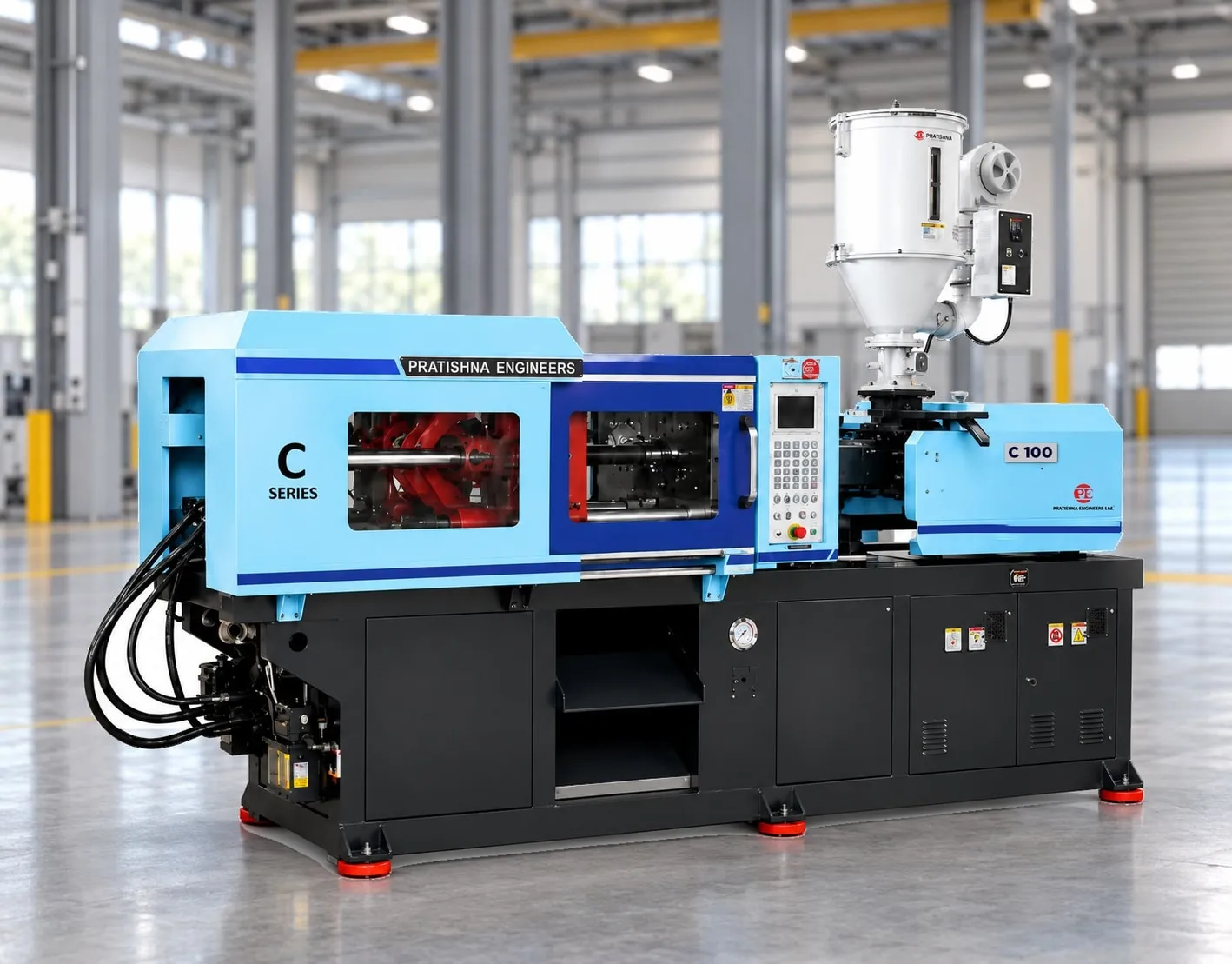
Small spotlight housings and trim rings run on the E Series (75-180 T). Deeper downlight cans, larger trims and multi-cavity tools need more opening stroke and projected area capacity, pointing to the C Series (140-320 T), with the H Series (120-350 T) for the largest housings. Housing and trim may also run on different machines.
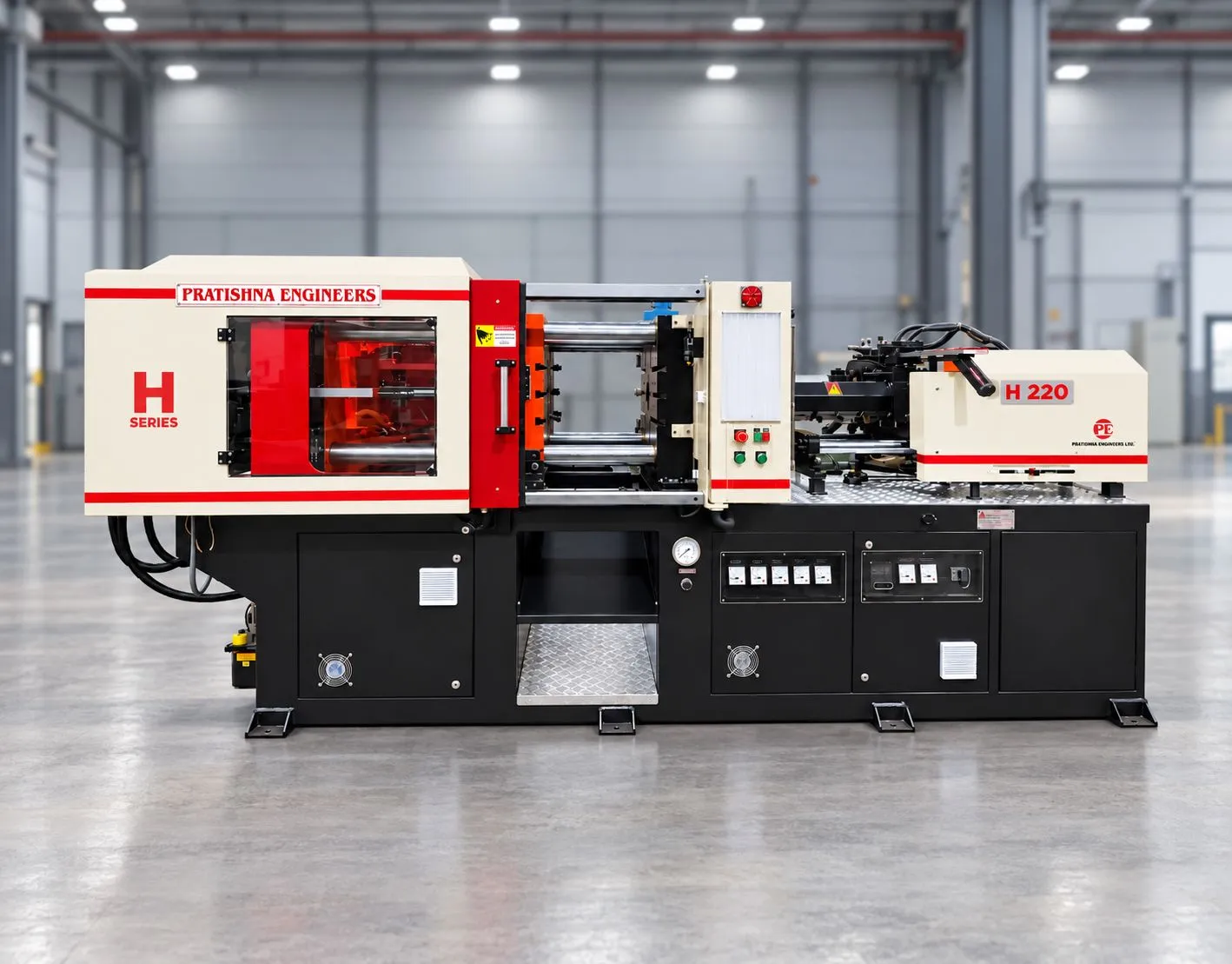
Not Sure Which Machine You Need?
Share your housing and trim details for a machine recommendation.
Why Choose Pratishna Engineers?
- Application-Based Machine Selection
- In-House Engineering & Manufacturing
- Multiple Machine Series
- Production-Focused Solutions
- End-to-End Technical Support
- Industry-Specific Solutions
- Machine Lifecycle Support
Injection Moulding Machine Buyer Resources
Download practical resources to help you select, size and specify the right machine.
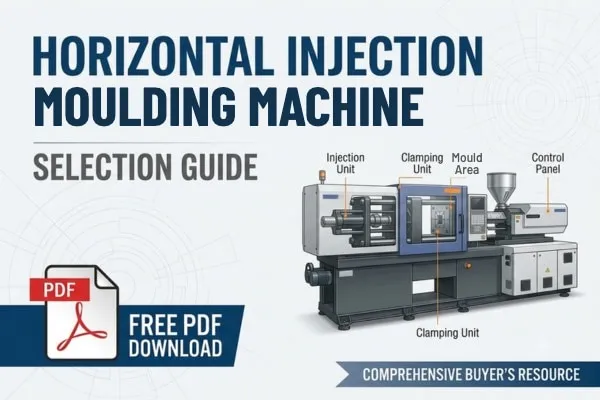
Horizontal Injection Moulding Machine Selection Guide
A step-by-step guide covering the key inputs needed to select the right machine: product weight, projected area, number of cavities, plastic material, required clamping force, shot / injection capacity, mould dimensions, production quantity, cycle time and automation requirement.
Download PDFPDF · 265 KB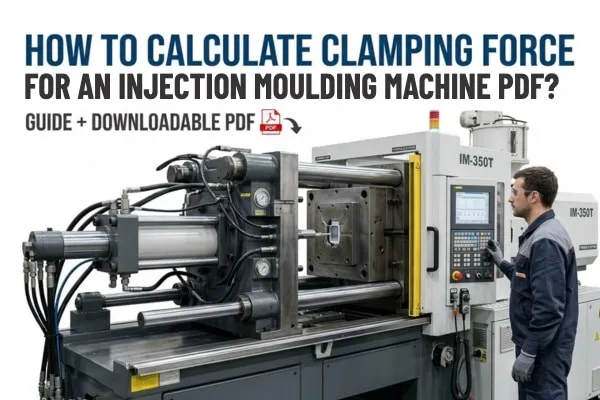
How to Calculate Clamping Force for an Injection Moulding Machine
A clear methodology that explains how clamping force is calculated, covering projected area, injection pressure, safety factor, number of cavities and material considerations.
Download PDFPDF · 363 KBLighting & Electrical Components & Machine Guide
A guide to Lighting & Electrical components, covering CFL holders, tube light fixtures, potting boxes, diffusers, downlight housings, street light parts and cable glands. It explains PC and PMMA optics, heat-resistant and flame-retardant grades, and how to match each part to a suitable machine.
Download PDFPDF · 202 KB
FAQs / Buyer Questions
Questions from makers of recessed and surface downlights.
Which Injection Moulding Machine Is Used to Make Downlight Housings?
Spotlight housings and trims usually fit E Series machines. Deep recessed cans and multi-cavity housing tools call for longer opening stroke and more clamping force, found in the C or H Series.Should the Trim Ring Use the Same Resin as the Housing?
Not always. The trim is the visible part and often uses a different resin or finish from the structural can, chosen for gloss, colour and texture. The can is chosen for heat ageing, glow-wire behaviour and clip strength.Does Thermally Conductive PC Need Different Machine Settings?
Thermally conductive grades carry fillers that lower flow and can wear the screw and check ring, much as glass fibre does. A wear-resistant screw, higher mould temperature and careful gating help fill thin fins and walls.
Why Do Spring Clip Mounts Crack?
Clip mounts flex every time a fitting is installed or serviced. Weld lines at the mount, thin sections or undried PA6 can lead to cracks. Gating so flow fronts meet away from the mount, and drying the resin, reduce the risk.Can Pratishna Recommend a Machine for My Downlight Housing?
Yes. Share the housing and trim drawings or samples, material grades, part weights, mould sizes, cavity counts and monthly volume, and Pratishna Engineers will recommend suitable machines.Does the Machine Suit Other Light Fitting Parts Too?
Yes. Similar machines can mould LED diffuser covers, potting boxes, tube light end caps and street light gear trays, subject to each mould.
Technical Disclaimer
Disclaimer: The information provided in this webpage is for general informational and educational purposes only. It is based on technical references and industry information available at the time of preparation and may be subject to change. It does not constitute engineering, technical, commercial or professional advice, nor does it constitute a quotation, specification, warranty or contractual commitment by Pratishna Engineers.
Actual injection moulding machine and process requirements vary according to the component design, material, mould, production volume, machine configuration and operating conditions. The information, examples, calculations and recommendations provided should be independently evaluated and verified for the specific application before making any equipment, process or production decision. Information obtained from third-party sources remains subject to the accuracy and limitations of those sources.
Limitation of Liability: Pratishna Engineers makes no representation or warranty, express or implied, regarding the completeness, accuracy or suitability of the information for any particular application. To the extent permitted by applicable law, Pratishna Engineers shall not be liable for any loss, damage, cost or consequence arising from reliance on or use of the information contained in this webpage. Final machine selection, configuration and application suitability should be confirmed with Pratishna Engineers based on complete and accurate project requirements.
Talk to Our Engineers
Planning a New Injection Moulding Project?
Share your component, material, mould and production target. Our engineering team will help you identify the right machine configuration.
- Machine Sales
- +91 99690 38542
- Service Support
- +91 97689 28259
- Sales Email
- [email protected]