
Injection Moulding Machine for Cartridge Gears, Roller Flanges and Drive Couplings
Cartridge gears, roller flanges and drive couplings are made on small horizontal injection moulding machines in multi-cavity moulds, mostly from POM, PA66 or PBT. Cavity count and shot weight set machine size. Cavity-to-cavity consistency matters most, since one drifting cavity puts an off-size gear into the train and shows up as print banding.
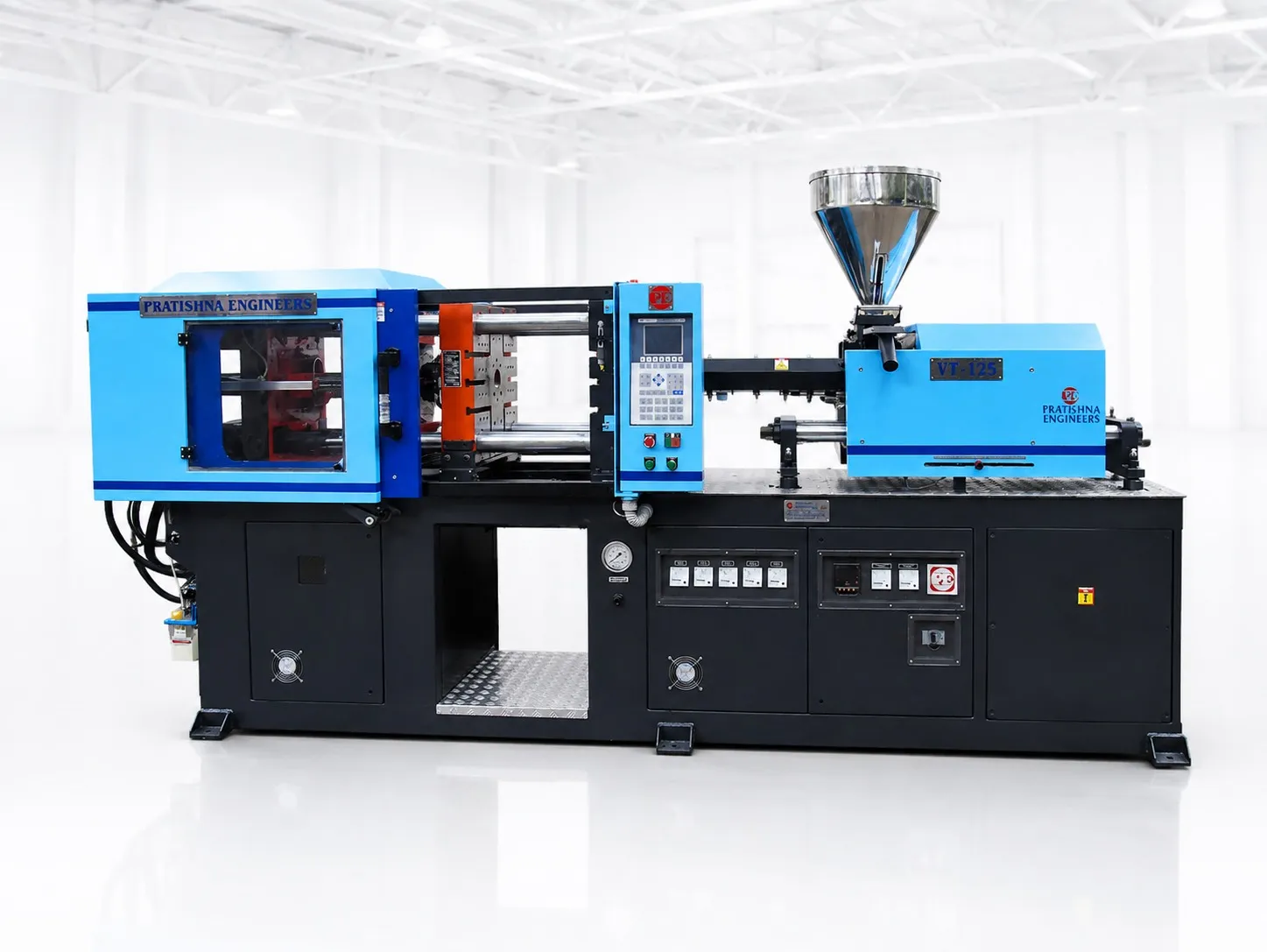
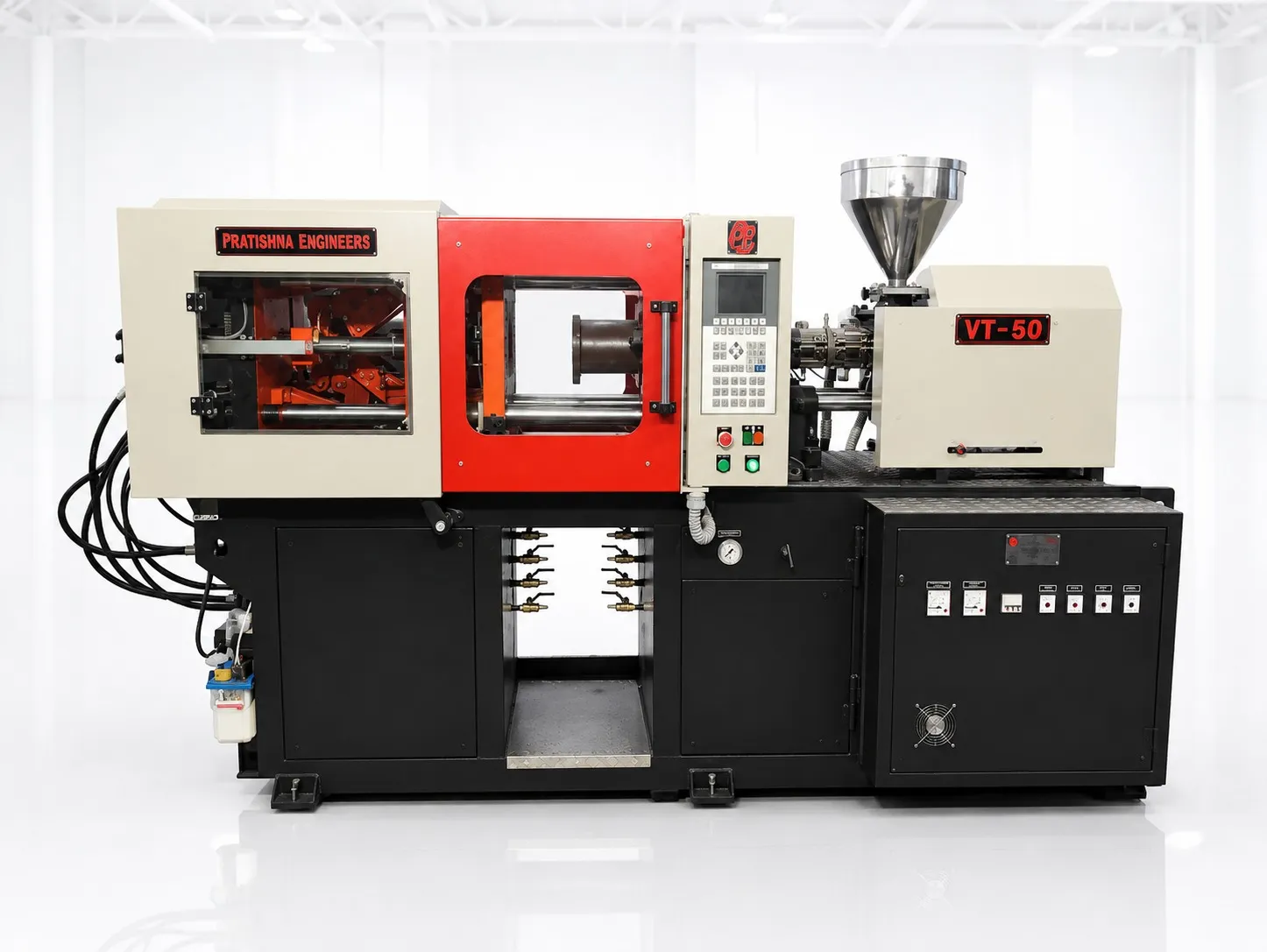
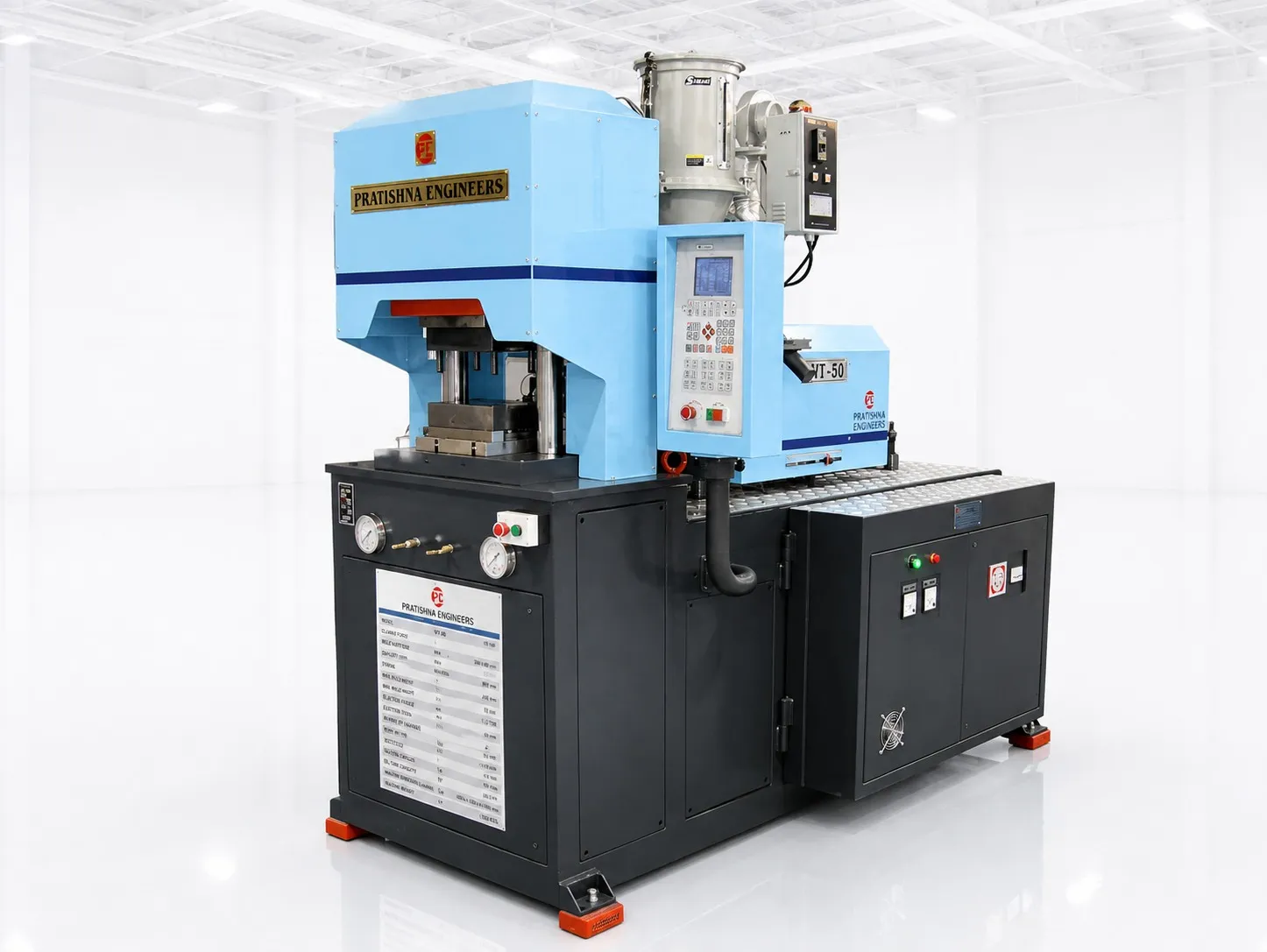
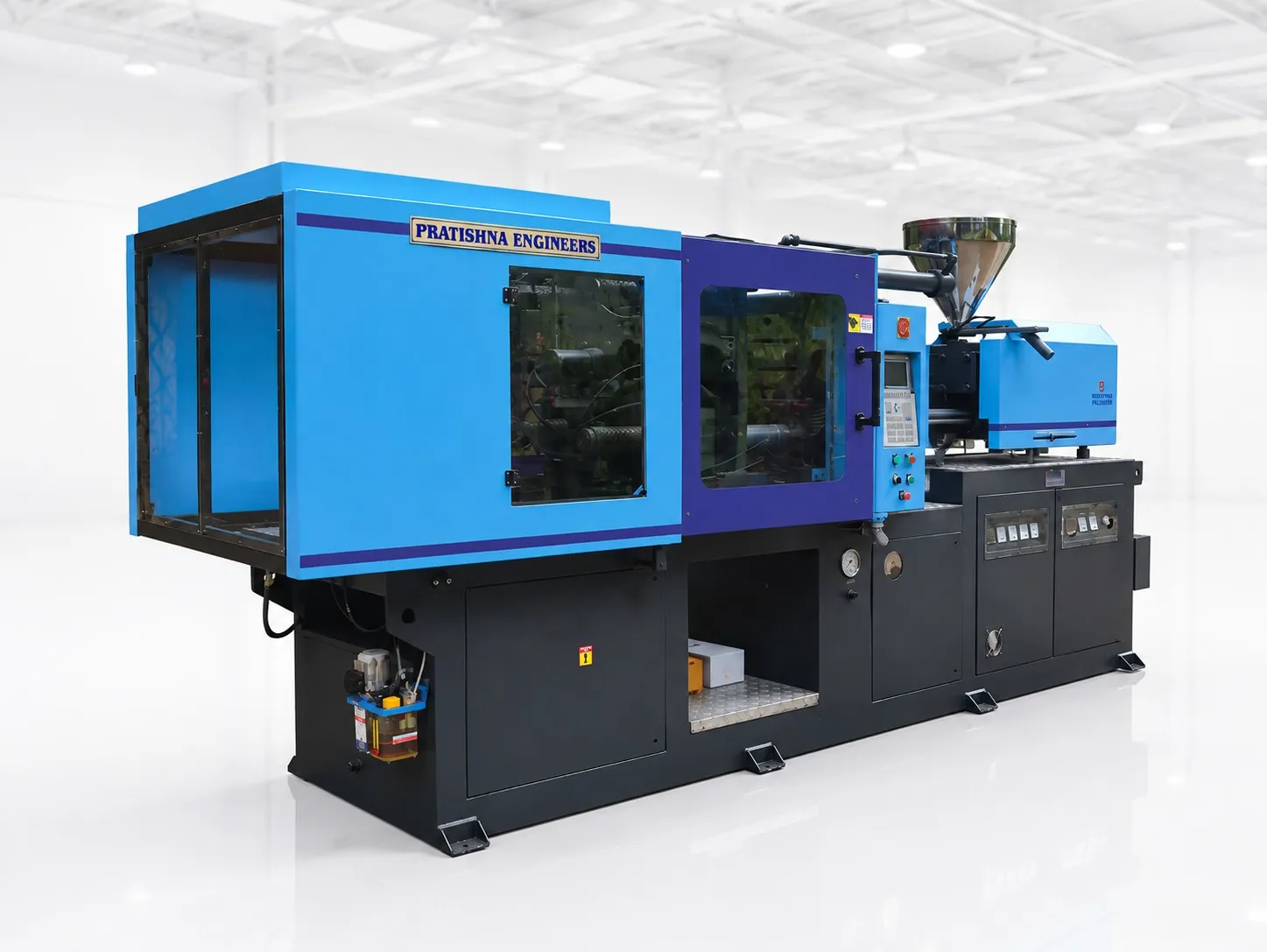
For these transmission parts, selection centres on repeatable shot size and holding pressure, because tooth form follows gear rules, not housing rules. Hybrid and horizontal injection moulding machines from Pratishna Engineers suit this work, and the team can recommend a configuration for your gear moulds.
Moulding Cartridge Gears?
Share the gear or coupling drawing, tooth data, resin and cavity count, and Pratishna Engineers will recommend a machine.
Machine Requirements for Cartridge Gear and Coupling Moulding
Gears and couplings inside a cartridge carry drive from the printer, so tooth accuracy and hub strength set the moulding needs:
- Repeatable shot and holding pressure for tooth form
- Cavity balance so every gear matches across the mould
- Centre or multi-point gating to keep gears round
- Steady mould temperature for predictable POM shrinkage
- Tooth tip venting to stop POM deposits and short shots
- Fibre orientation control on glass-filled PA66 couplings
Recommended Machine for Cartridge Gears and Couplings
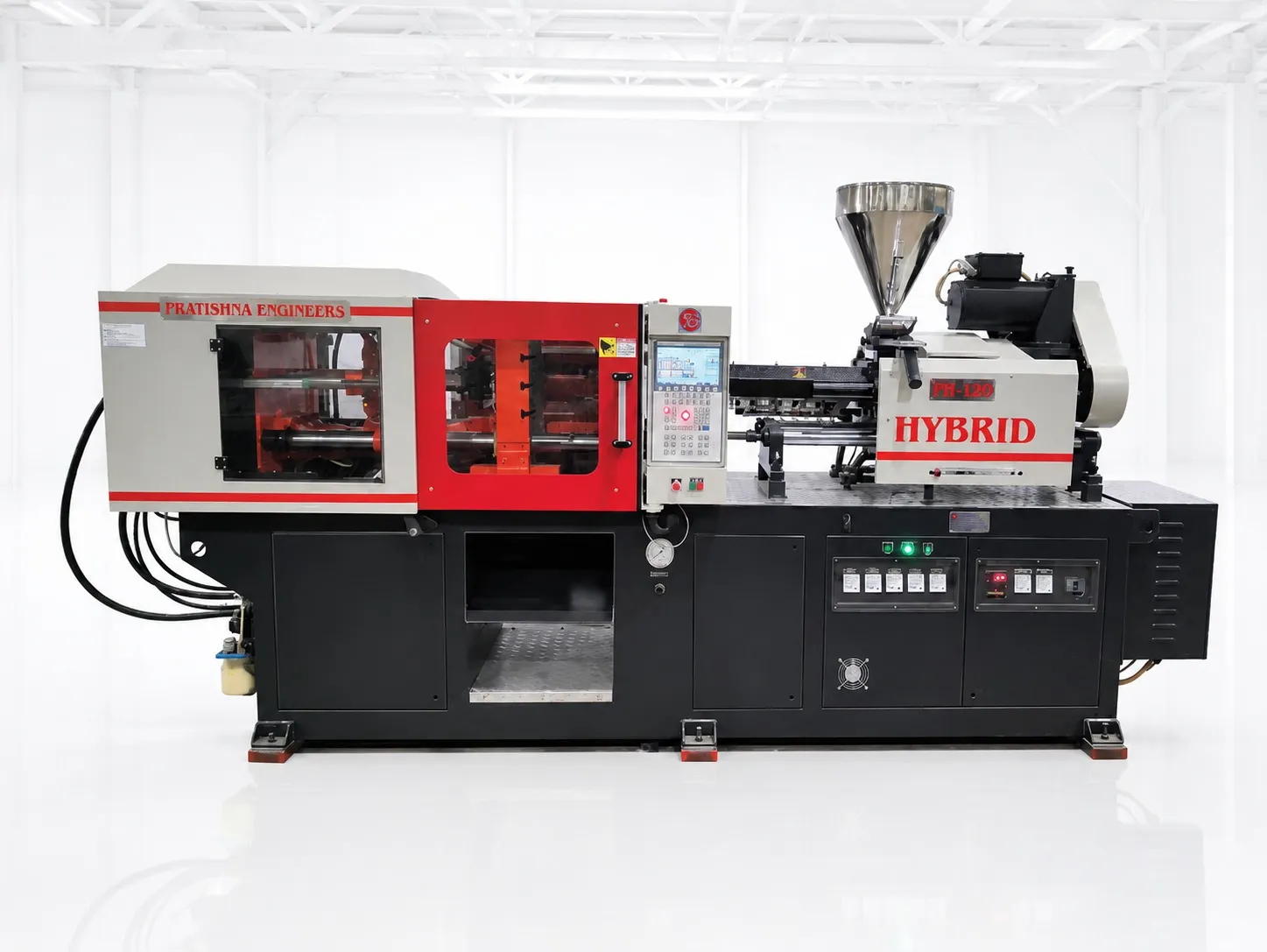
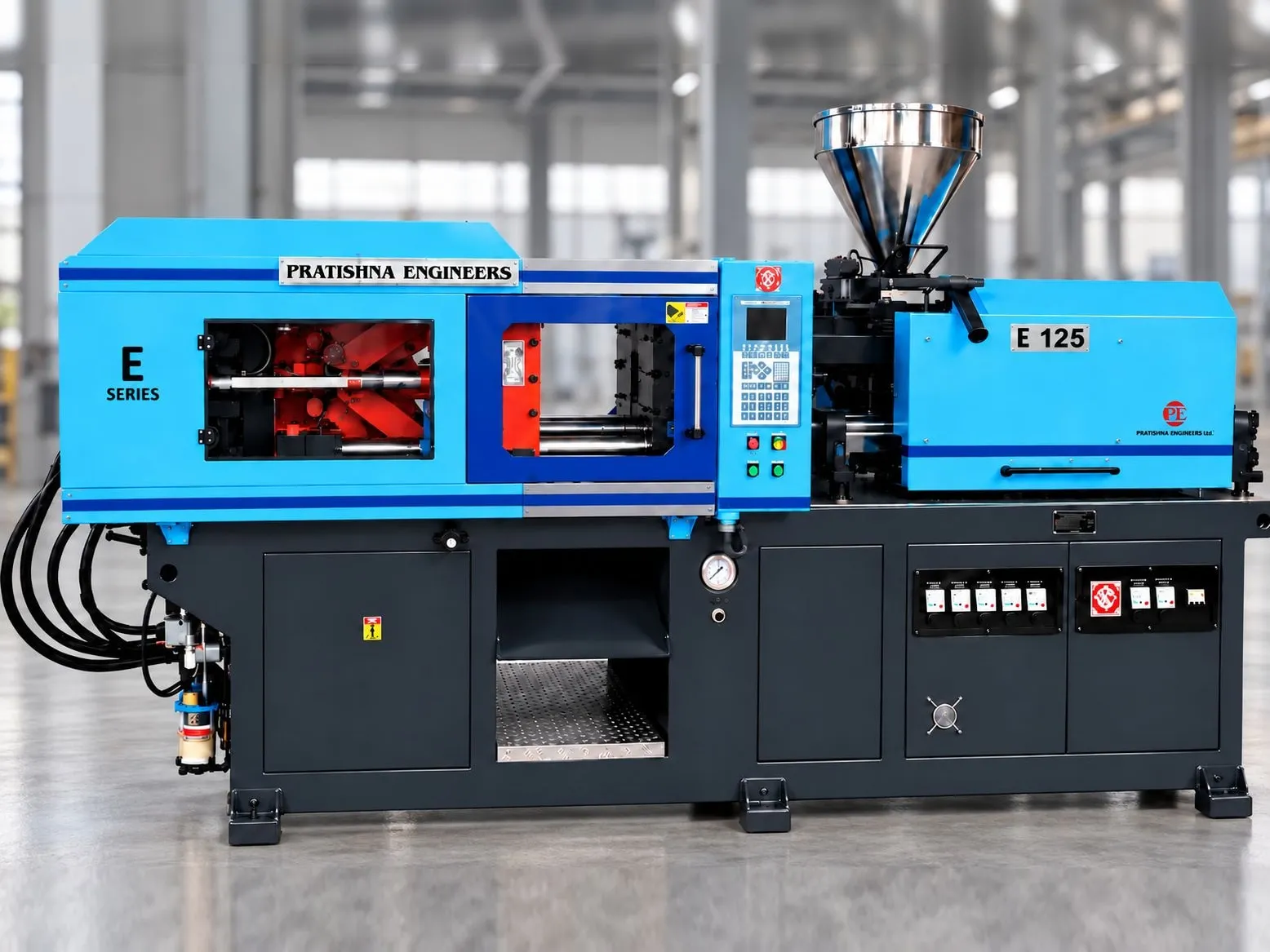
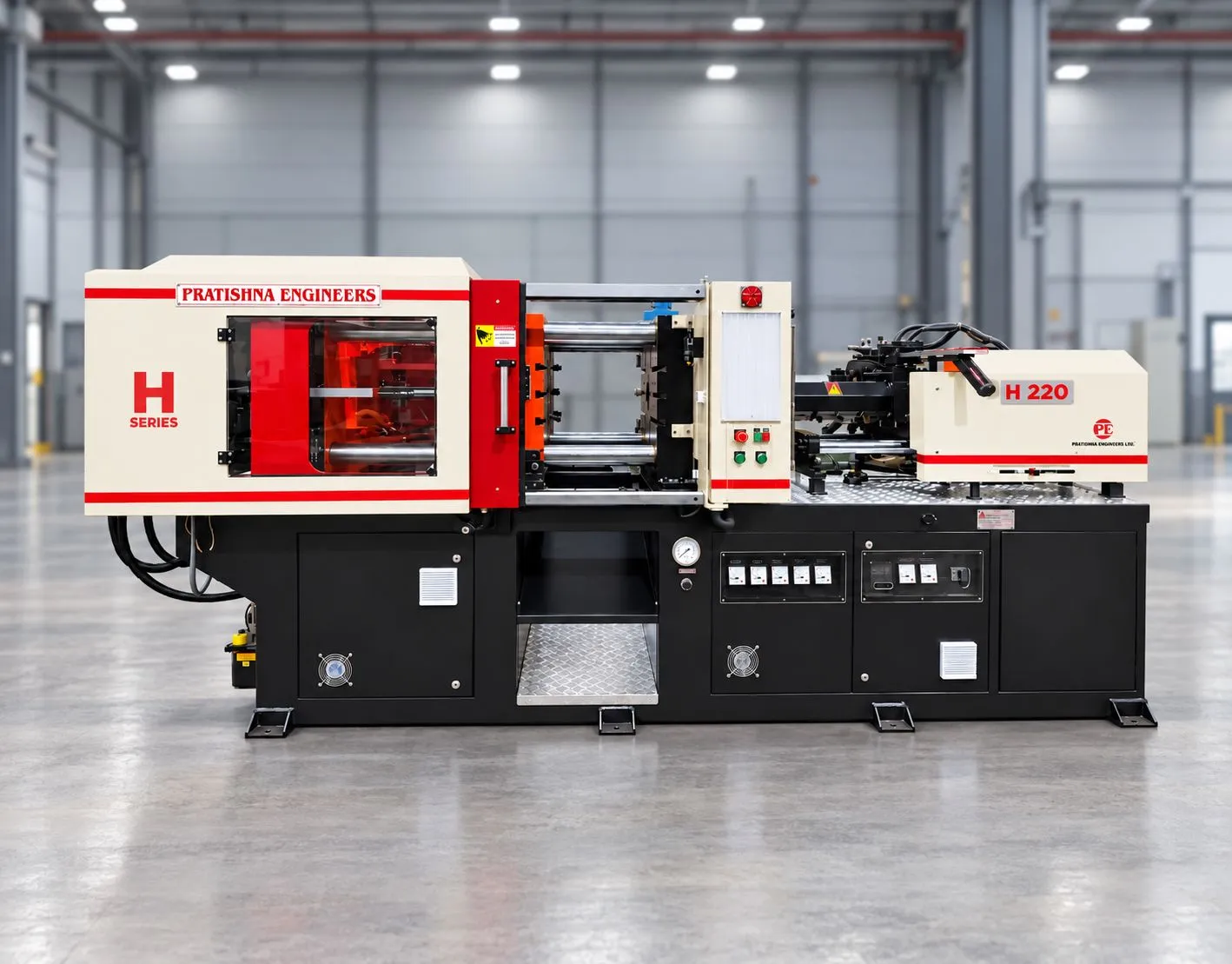
Gears, flanges and couplings are small parts, so lower tonnage is often enough and the cavity count sets the final size. The Hybrid PH Series (120-140 T) leads for its electric injection and repeatable shots. Smaller gear moulds run on the E Series (75-180 T), and the H Series (120-350 T) takes high-cavity or family tools.
Not Sure Which Machine You Need?
Send the gear drawing and cavity plan for a machine suggestion.
Why Choose Pratishna Engineers?
- Application-Based Machine Selection
- In-House Engineering & Manufacturing
- Multiple Machine Series
- Production-Focused Solutions
- End-to-End Technical Support
- Industry-Specific Solutions
- Machine Lifecycle Support
Injection Moulding Machine Buyer Resources
Download practical resources to help you select, size and specify the right machine.
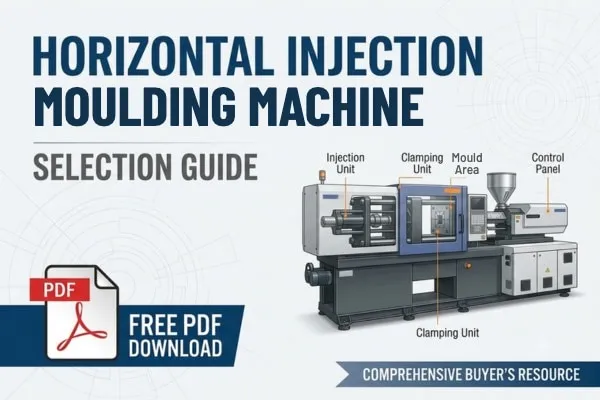
Horizontal Injection Moulding Machine Selection Guide
A step-by-step guide covering the key inputs needed to select the right machine: product weight, projected area, number of cavities, plastic material, required clamping force, shot / injection capacity, mould dimensions, production quantity, cycle time and automation requirement.
Download PDFPDF · 265 KB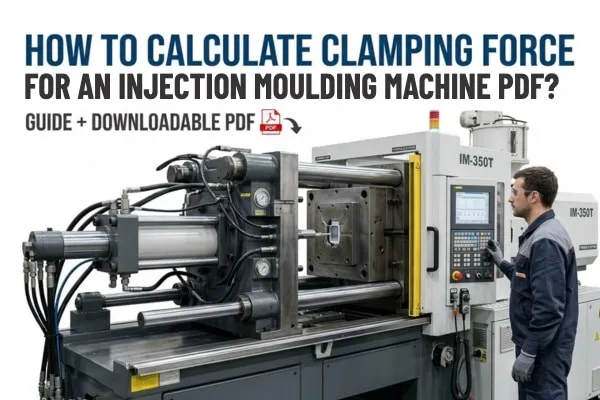
How to Calculate Clamping Force for an Injection Moulding Machine
A clear methodology that explains how clamping force is calculated, covering projected area, injection pressure, safety factor, number of cavities and material considerations.
Download PDFPDF · 363 KBOffice & Printing Components & Machine Guide
A guide to Office & Printing components, covering toner bottles, cartridge bodies, ink housings, cartridge gears, seals, printer internals, pen parts and desk hardware. It explains engineering plastics, precise fits, ink and toner compatibility, and how to match each part to a suitable machine.
Download PDFPDF · 204 KB
FAQs / Buyer Questions
Answers to the questions gear and coupling moulders raise most.
Which Injection Moulding Machine Is Used to Make Cartridge Gears and Couplings?
A small horizontal machine with very repeatable injection. Hybrid PH or E Series machines suit most gear and flange moulds, and the H Series is used when the cavity count or a family layout needs more clamp.Why Is POM Used for Cartridge Gears?
POM gives low friction, wear resistance and predictable shrinkage, so tooth form can be compensated in the mould. PBT and PA66 are used for some flanges, and glass-filled PA66 for couplings carrying higher torque.How Is Fatigue at the Coupling Hub Avoided?
Drive couplings take a torque shock at every start, so cracks begin at the hub. Generous radii, gating that keeps weld lines off the hub and enough holding pressure to prevent voids all help. Dry nylon grades before moulding.
How Is Gear Accuracy Kept Across All Cavities?
Balanced runners and equal cooling make each cavity shrink alike. Gears from every cavity are measured at first-off and at intervals, since one drifting cavity can cause print banding while the rest stay in tolerance.Can Pratishna Recommend a Machine for My Cartridge Gear?
Yes. Share the gear or coupling drawing, tooth data, resin, part weight, mould dimensions, cavity count and monthly volume, and Pratishna Engineers will recommend a suitable machine.Does the Machine Suit Other Cartridge Mechanism Parts Too?
Yes. Similar machines can mould toner seals and shutters, ink tank valves, printer internal parts such as roller holders and levers, and pen mechanisms, each sized to its own mould.
Technical Disclaimer
Disclaimer: The information provided in this webpage is for general informational and educational purposes only. It is based on technical references and industry information available at the time of preparation and may be subject to change. It does not constitute engineering, technical, commercial or professional advice, nor does it constitute a quotation, specification, warranty or contractual commitment by Pratishna Engineers.
Actual injection moulding machine and process requirements vary according to the component design, material, mould, production volume, machine configuration and operating conditions. The information, examples, calculations and recommendations provided should be independently evaluated and verified for the specific application before making any equipment, process or production decision. Information obtained from third-party sources remains subject to the accuracy and limitations of those sources.
Limitation of Liability: Pratishna Engineers makes no representation or warranty, express or implied, regarding the completeness, accuracy or suitability of the information for any particular application. To the extent permitted by applicable law, Pratishna Engineers shall not be liable for any loss, damage, cost or consequence arising from reliance on or use of the information contained in this webpage. Final machine selection, configuration and application suitability should be confirmed with Pratishna Engineers based on complete and accurate project requirements.
Talk to Our Engineers
Planning a New Injection Moulding Project?
Share your component, material, mould and production target. Our engineering team will help you identify the right machine configuration.
- Machine Sales
- +91 99690 38542
- Service Support
- +91 97689 28259
- Sales Email
- [email protected]