
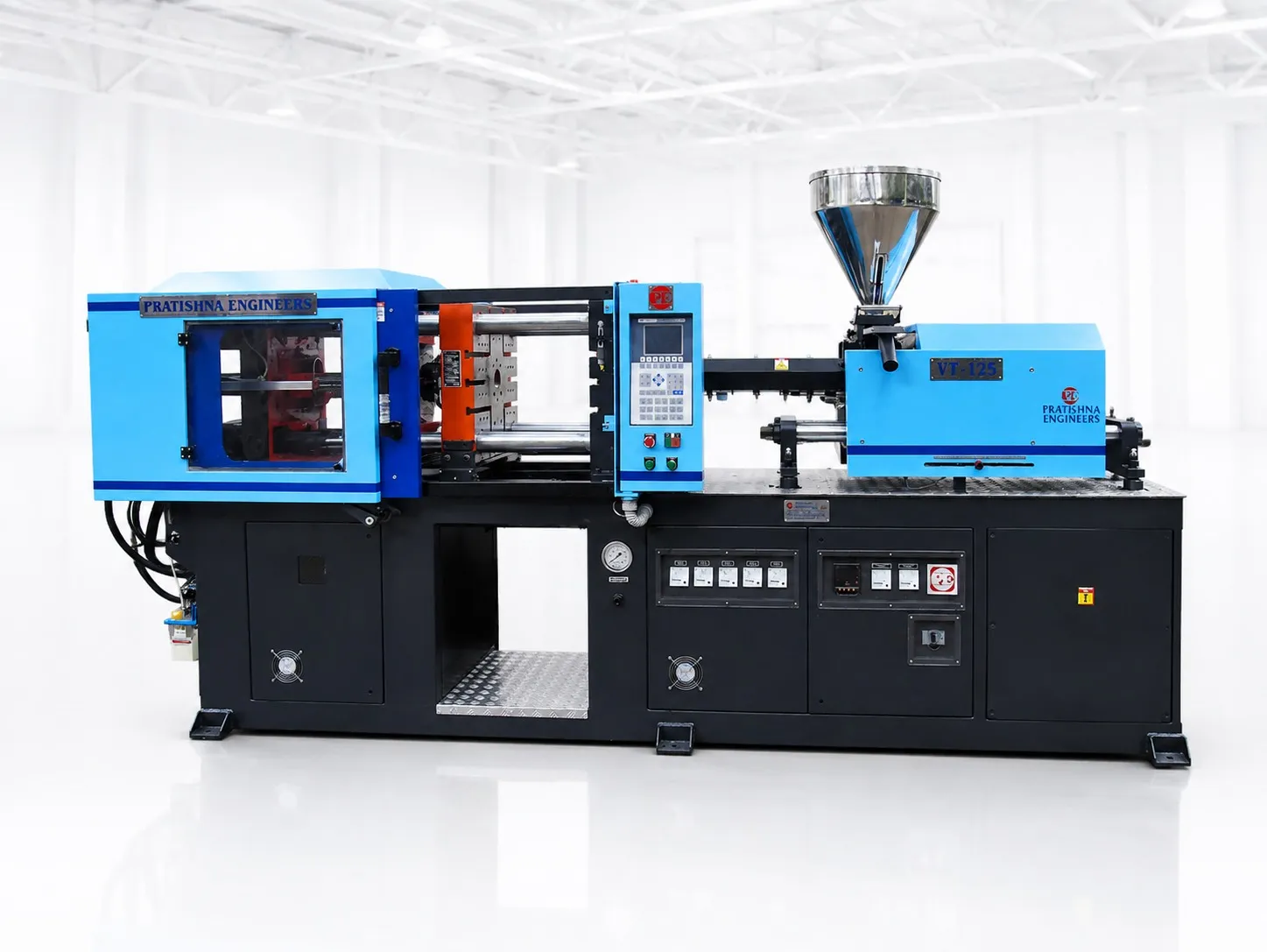
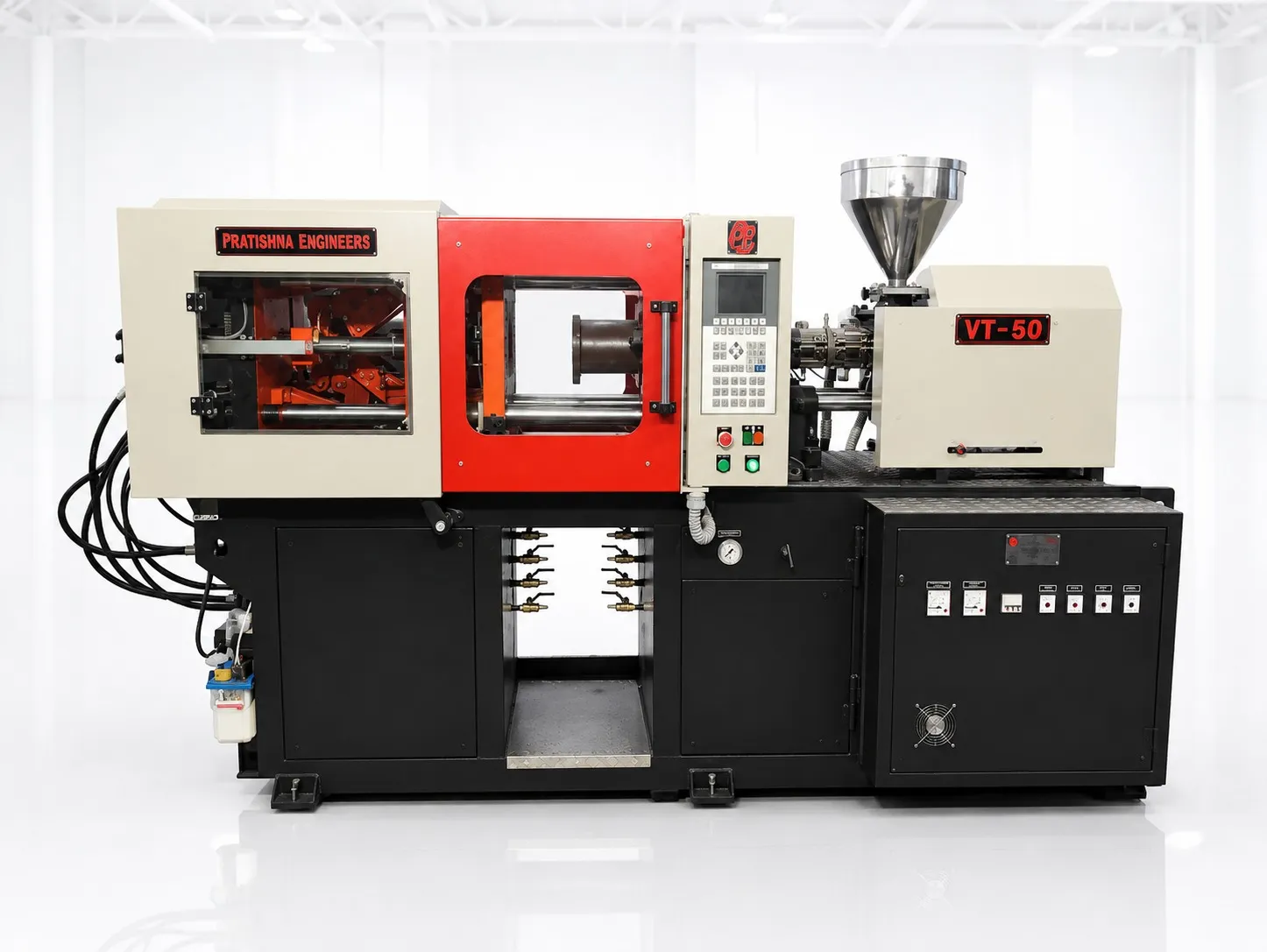
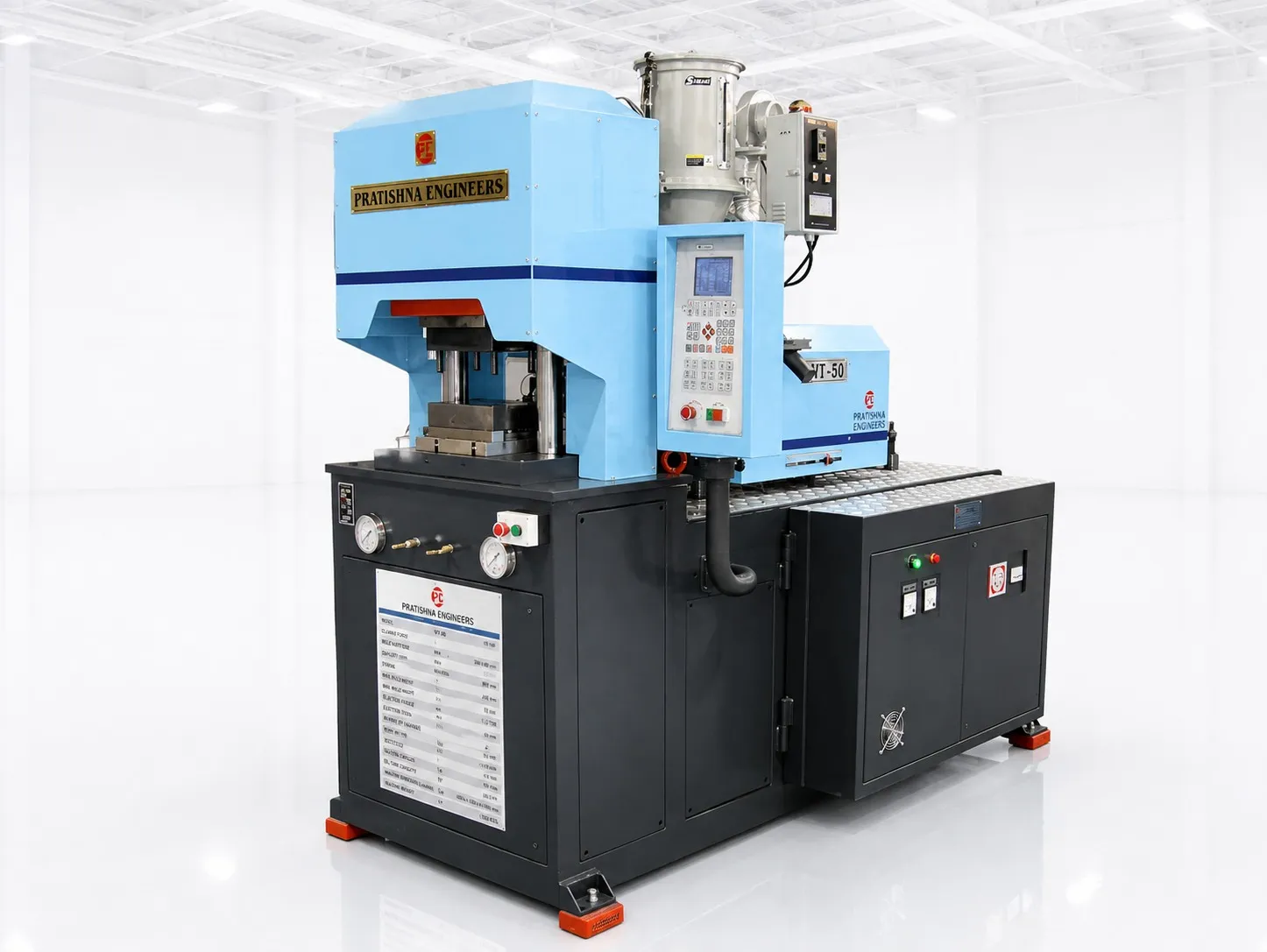
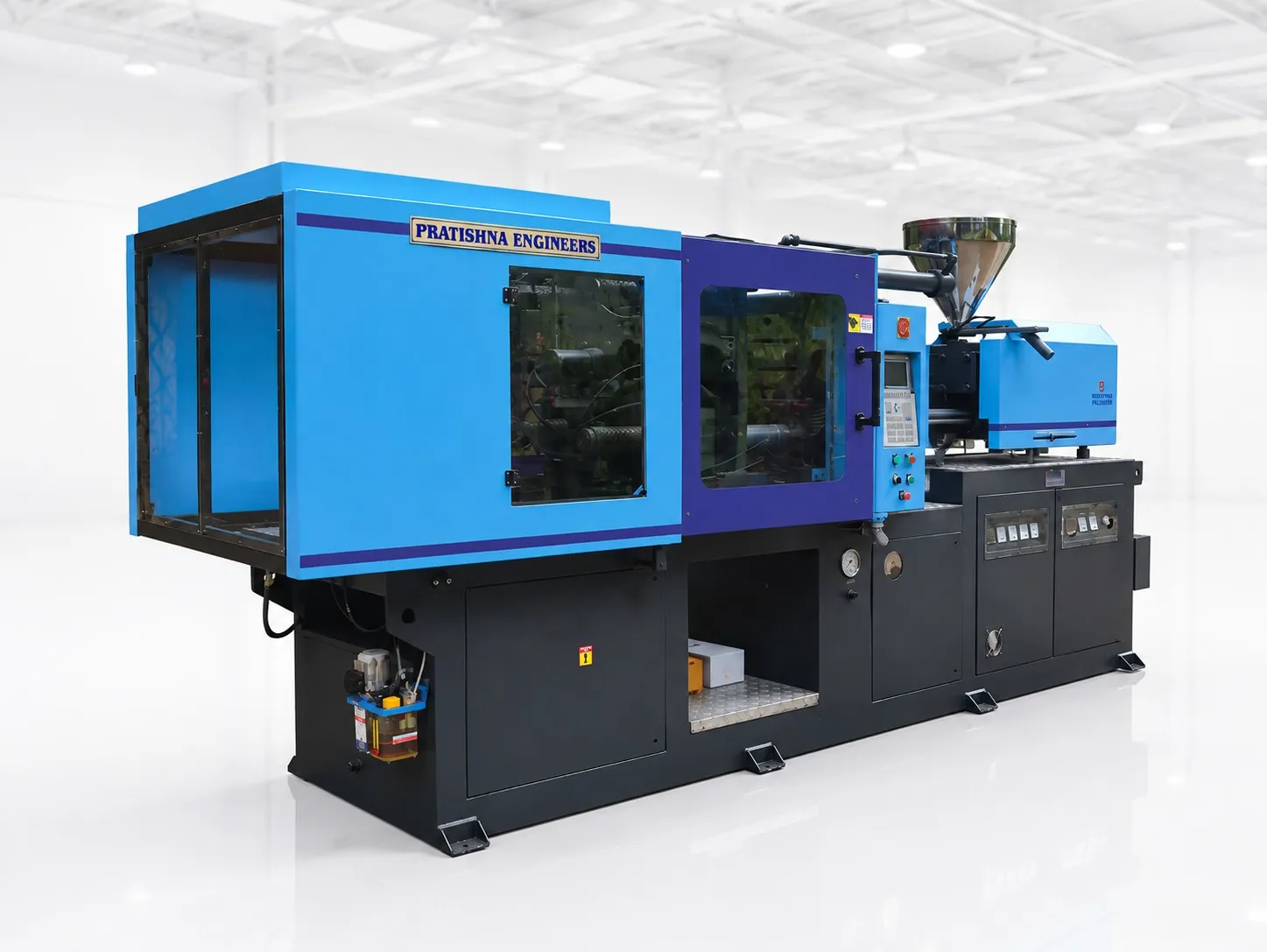
Injection Moulding Machine for Toner Seals, Shutters and Hopper Caps
Toner seals, shutters and hopper caps are small parts made on horizontal injection moulding machines in high-cavity moulds from PP, HDPE or POM, with TPE for sealing lips. Cavity count and runner layout set the machine size. Flatness of the sliding shutter and a flash-free sealing edge matter most, as both decide whether toner escapes in transit.
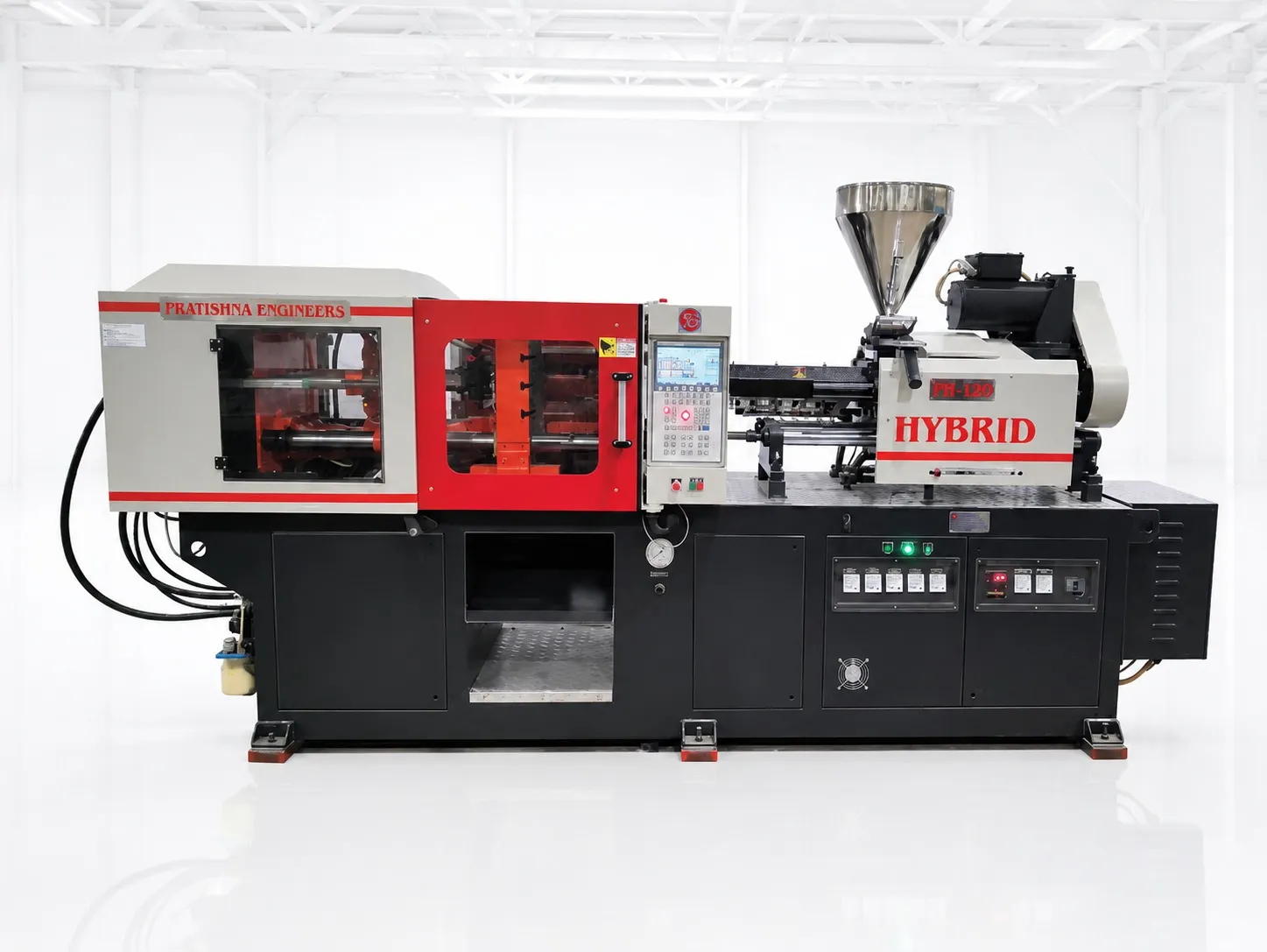
Machine selection for these parts weighs cavity count against shot size and keeps the process steady enough that every shutter slides with the same fit. Pratishna Engineers offers horizontal injection moulding machines for toner seal and shutter moulds and can recommend a configuration.
Moulding Toner Shutters and Seals?
Share the shutter, seal and cap drawings, resins and cavity counts, and Pratishna Engineers will recommend a machine.
Machine Requirements for Toner Seal and Shutter Moulding
Shutters, seals and caps keep toner inside the cartridge in transit and during insertion, so the fit is the product:
- High-cavity moulds with balanced hot runner filling
- Flat, warp-free shutters for a consistent sliding fit
- Flash-free sealing lips and shutter edges
- Predictable POM shrinkage on slide rails and catches
- Antistatic PP or HDPE grades where toner clings
- TPE lips fitted after moulding or overmoulded on enquiry
Recommended Machine for Toner Seals and Shutters
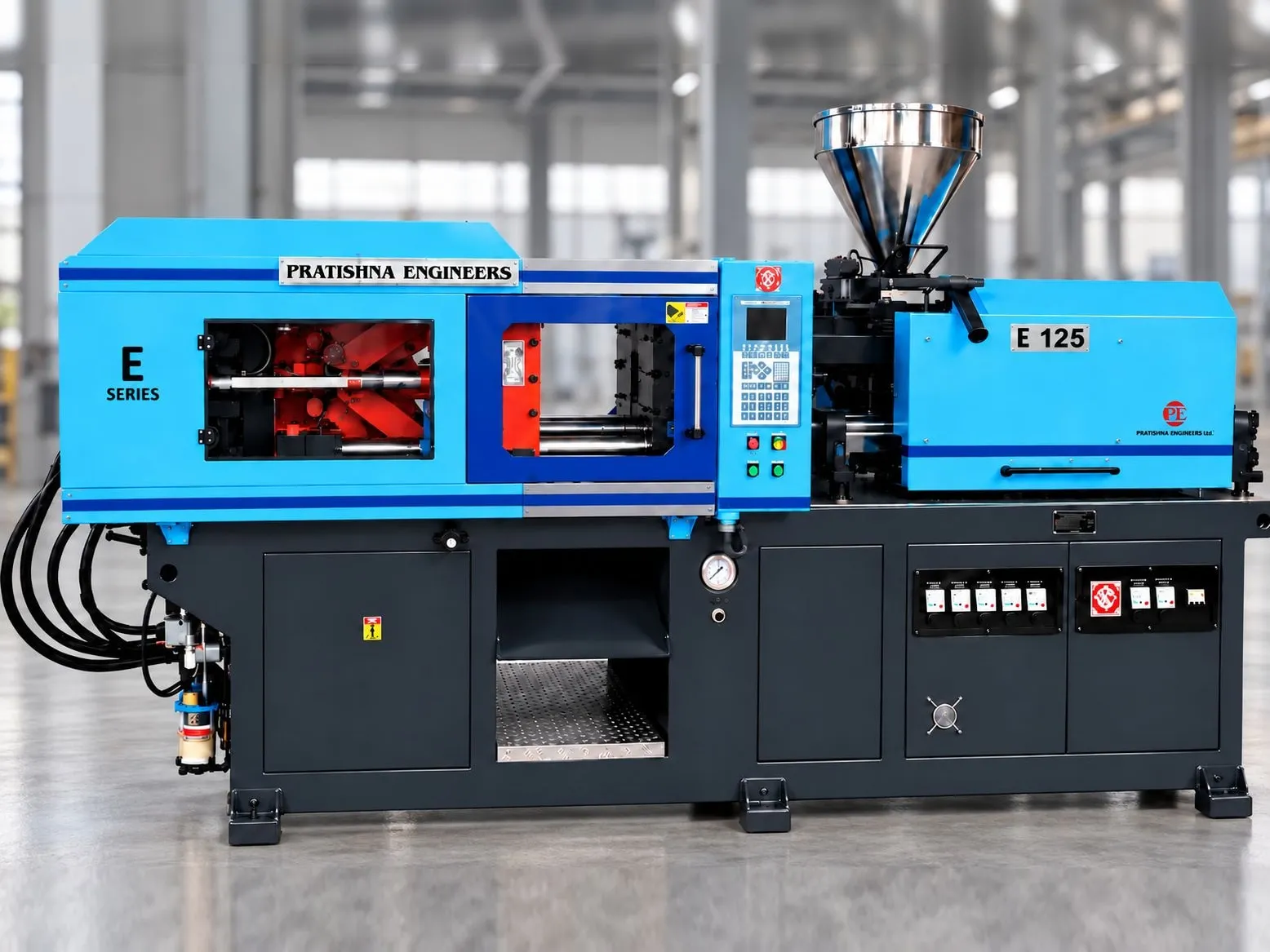
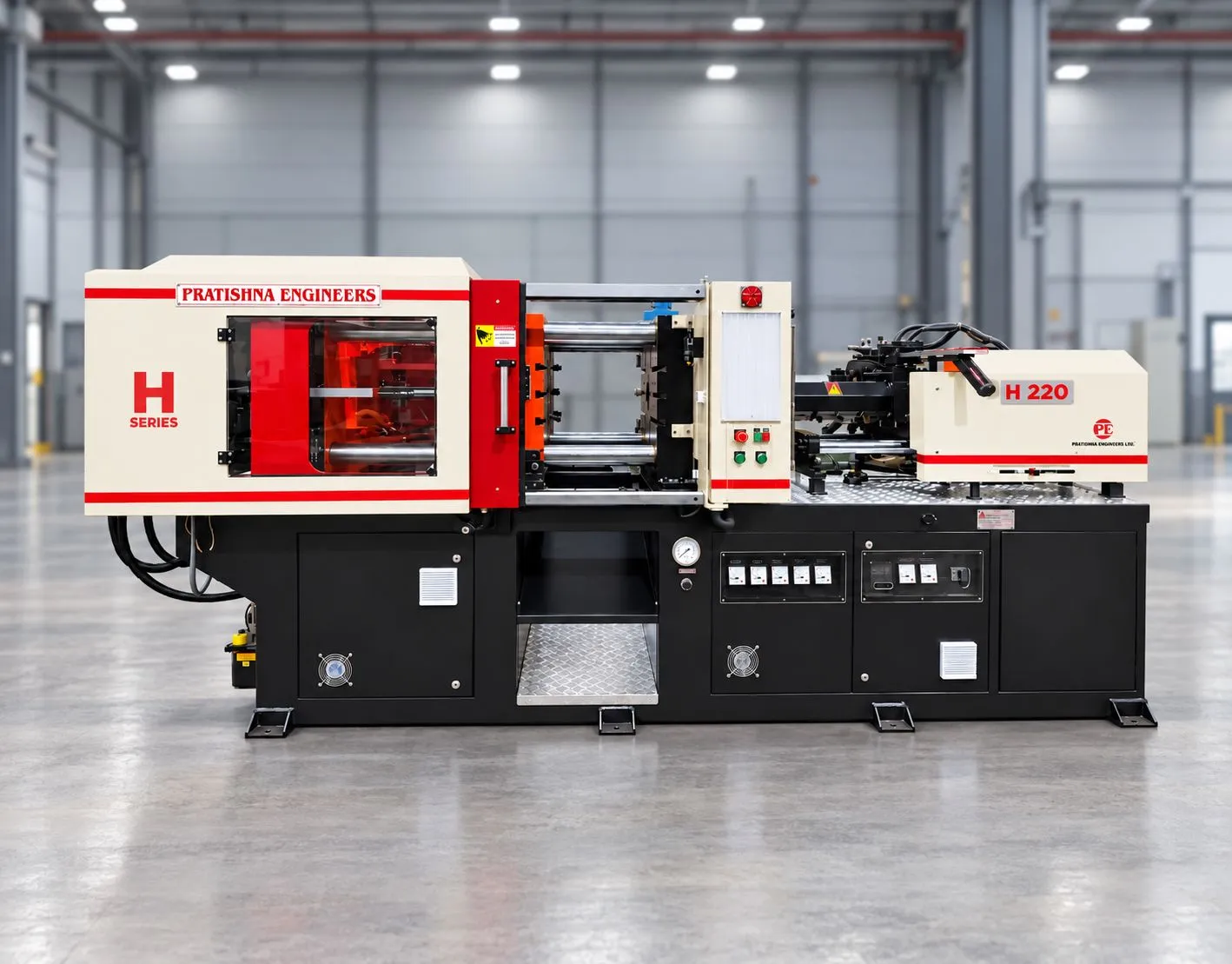
Seals, shutters and caps are small, so tonnage comes from the number of cavities and the runner rather than from the part itself. The E Series (75-180 T) suits most shutter and cap moulds. High-cavity tools with large mould plates go to the H Series (120-350 T).
Not Sure Which Machine You Need?
Share the shutter drawing and cavity count for a recommendation.
Why Choose Pratishna Engineers?
- Application-Based Machine Selection
- In-House Engineering & Manufacturing
- Multiple Machine Series
- Production-Focused Solutions
- End-to-End Technical Support
- Industry-Specific Solutions
- Machine Lifecycle Support
Injection Moulding Machine Buyer Resources
Download practical resources to help you select, size and specify the right machine.
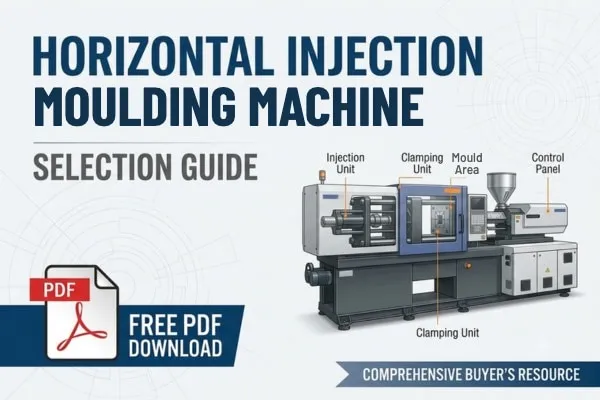
Horizontal Injection Moulding Machine Selection Guide
A step-by-step guide covering the key inputs needed to select the right machine: product weight, projected area, number of cavities, plastic material, required clamping force, shot / injection capacity, mould dimensions, production quantity, cycle time and automation requirement.
Download PDFPDF · 265 KB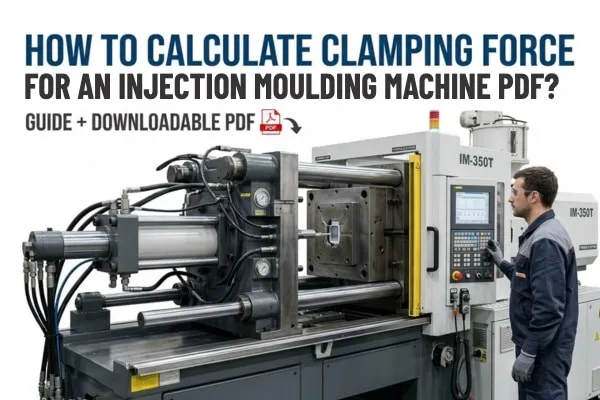
How to Calculate Clamping Force for an Injection Moulding Machine
A clear methodology that explains how clamping force is calculated, covering projected area, injection pressure, safety factor, number of cavities and material considerations.
Download PDFPDF · 363 KBOffice & Printing Components & Machine Guide
A guide to Office & Printing components, covering toner bottles, cartridge bodies, ink housings, cartridge gears, seals, printer internals, pen parts and desk hardware. It explains engineering plastics, precise fits, ink and toner compatibility, and how to match each part to a suitable machine.
Download PDFPDF · 204 KB
FAQs / Buyer Questions
Points buyers of toner shutter and seal moulds usually raise first.
Which Injection Moulding Machine Is Used to Make Toner Seals and Shutters?
Small horizontal machines matched to the cavity count. The E Series covers most shutter, seal and cap moulds, and the H Series takes higher-cavity tools that need bigger platens or more clamp.Can the TPE Sealing Lip Be Moulded Onto the Shutter?
It can, but overmoulding TPE onto a rigid shutter is a two-material process planned separately on enquiry. Many makers mould the rigid part on a standard machine and fit a separate TPE or foam seal.Why Must a Toner Shutter Stay Flat?
A warped shutter binds or leaves a gap, and toner escapes. Gate position, even cooling and steady holding pressure keep it flat, and POM parts are checked after post-mould shrinkage settles, not straight off the mould.
Are Antistatic Grades Needed for Hopper Caps?
They help where toner cling causes dosing problems or messy refilling. Antistatic PP or HDPE grades run much like standard grades, though masterbatch and additive levels should stay constant from lot to lot.Can Pratishna Recommend a Machine for My Toner Shutter or Seal?
Yes. Share the part drawings or samples, resins, part weights, mould dimensions, cavity count and monthly volume, and Pratishna Engineers will recommend a suitable machine.Does the Machine Suit Other Toner Cartridge Parts Too?
Yes. Cartridge gears and couplings, toner bottles, ink tank caps and small printer internal parts can be moulded on the same machines, subject to the mould.
Technical Disclaimer
Disclaimer: The information provided in this webpage is for general informational and educational purposes only. It is based on technical references and industry information available at the time of preparation and may be subject to change. It does not constitute engineering, technical, commercial or professional advice, nor does it constitute a quotation, specification, warranty or contractual commitment by Pratishna Engineers.
Actual injection moulding machine and process requirements vary according to the component design, material, mould, production volume, machine configuration and operating conditions. The information, examples, calculations and recommendations provided should be independently evaluated and verified for the specific application before making any equipment, process or production decision. Information obtained from third-party sources remains subject to the accuracy and limitations of those sources.
Limitation of Liability: Pratishna Engineers makes no representation or warranty, express or implied, regarding the completeness, accuracy or suitability of the information for any particular application. To the extent permitted by applicable law, Pratishna Engineers shall not be liable for any loss, damage, cost or consequence arising from reliance on or use of the information contained in this webpage. Final machine selection, configuration and application suitability should be confirmed with Pratishna Engineers based on complete and accurate project requirements.
Talk to Our Engineers
Planning a New Injection Moulding Project?
Share your component, material, mould and production target. Our engineering team will help you identify the right machine configuration.
- Machine Sales
- +91 99690 38542
- Service Support
- +91 97689 28259
- Sales Email
- [email protected]